Not a number. A complete guide.

Daily portion calculated from the veterinary RER formula. Breed-specific health notes. Dietary flags personalised to their profile. And a food recommendation that actually matches — not a generic ad.

Get my pet's report
How it works

From profile to personalised report in under two minutes

Most feeding guides give every Labrador the same answer. Ours doesn't. We use your pet's exact breed, life stage, current weight, activity level, and health profile to build a feeding report using the same RER formula used in veterinary practice — then match them to a food that fits.

Breed-specific health notes

41 breed profiles covering known health predispositions, nutritional flags, and dietary priorities. A Beagle's report is genuinely different from a Whippet's.

Veterinary RER formula

We calculate from Resting Energy Requirement — RER = 70 × weight0.75 — then apply life stage and activity multipliers, exactly as used in vet practice.

Always worth revisiting

Needs change. Bookmark your pet's unique profile URL and return whenever their weight, activity, or health picture changes. No account. No data stored.

The science

Why back-of-pack feeding guides are wrong for your pet

Every bag of pet food carries a generic feeding table based on weight alone. It doesn't account for whether your dog is neutered, whether your cat is geriatric (and therefore needs more calories, not fewer), or whether your Labrador has the genetic mutation that makes their appetite regulation genuinely different.

The veterinary RER formula gives a baseline that accounts for metabolic body weight rather than raw kilograms. Combined with life-stage and activity multipliers, it produces a figure calibrated to your specific pet, not a demographic average.

Read our methodology →
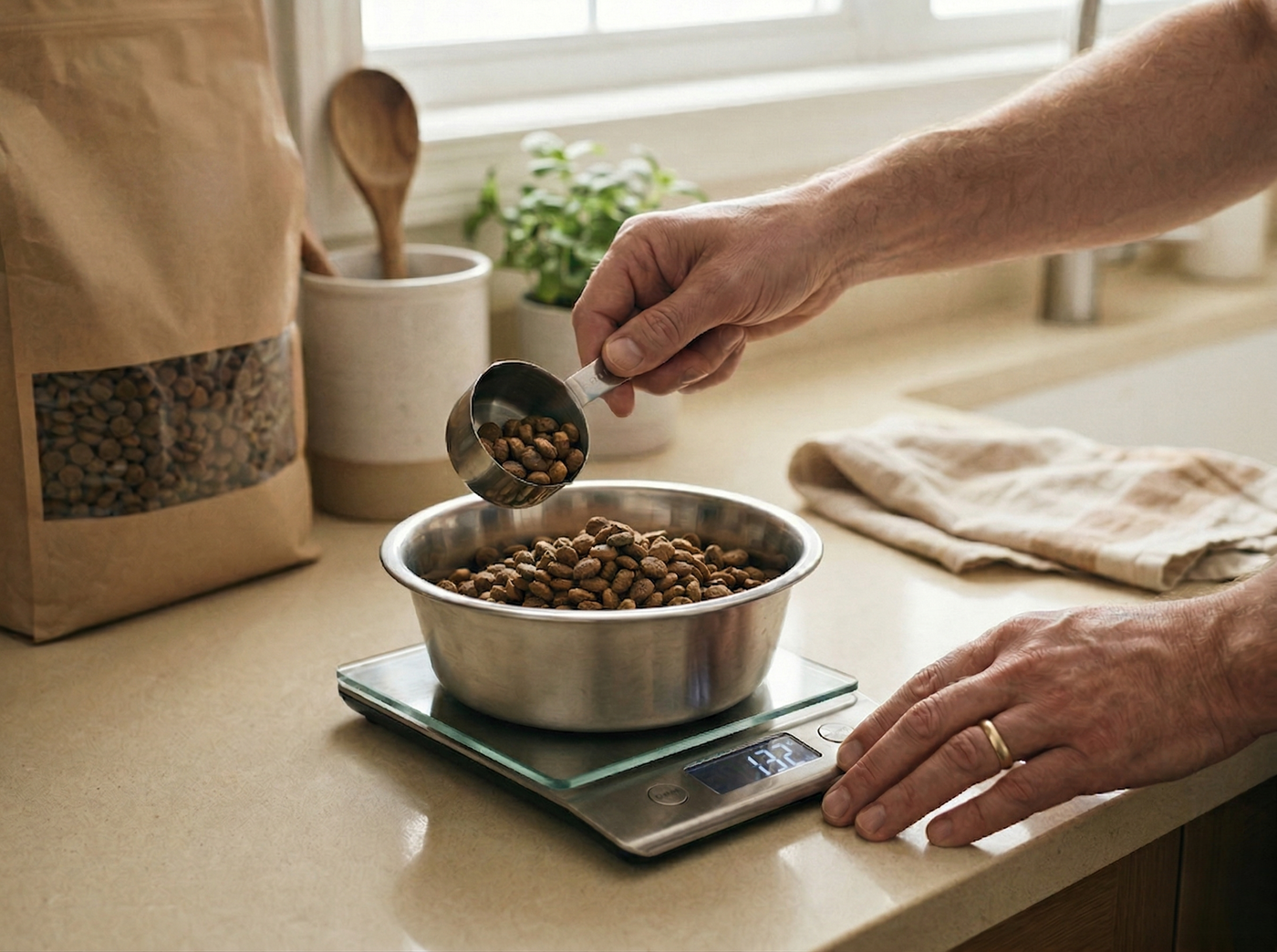

Owner carefully weighing pet food on a kitchen scale
Ingredient checker

Is that ingredient safe for your pet?

120 ingredients rated safe, caution, or avoid — for both dogs and cats. From everyday proteins to kitchen staples you might not realise are dangerous.

Safe

Chicken, salmon, sweet potato, blueberries — explained with caveats for specific health conditions.

Use with care

Dairy, certain fish, some grains — safe for most but problematic for specific conditions or breeds.

Avoid

Xylitol, grapes, onions, macadamia nuts — genuinely dangerous, with explanations of why.

Breed guides

Nutrition built around your breed

Every breed has different predispositions, dietary priorities, and nutritional flags. Your pet's report includes breed-specific guidance — not generic advice repackaged with a breed name.

Our independence

Not a retailer. Not a brand. Just a guide.

Every other pet feeding resource you'll find is owned by a retailer, funded by a pet food manufacturer, or built on a personal brand. We have none of those relationships influencing what we tell you.

When we recommend a product, it's because it fits the pet's profile — not because a brand paid us to be first. Where we earn a small commission through affiliate links, we say so plainly.

Read our about page →
Cocker Spaniel waiting patiently by an empty bowl